Children’s nurse Rebecca Mottram explains how to transition from night-time nappies to your child staying dry during the night.
Most parents assume night-time dryness is something children simply “grow into”. So when children wet the bed, parents are often told to wait for hormones to kick in, keep the night nappy on, and try again later. The problem is that much of the advice parents hear about night-time potty training isn’t actually based on the evidence.
As a children’s nurse and potty training specialist, I often meet families who feel stuck and unsure what to do next. However, when we look at the clinical evidence base, the picture is actually far more encouraging.
Research shows that the vast majority of children can learn to stay dry at night, and that establishing good habits early plays an important role in bladder health. In fact, statistically speaking, regular ongoing bedwetting affects only around 15% of children, and only a small proportion of these will ever need medical therapy.
Night time dryness doesn’t depend on “hormones kicking-in”
The idea that children need to develop ‘night-time hormones’ before they can be dry at night is one of the most misleading (aka wrong) information parents hear.
It’s true that the hormone antidiuretic hormone (ADH) helps reduce urine production during sleep. But this hormone is present from birth. The vast majority of children already produce enough of it to support night-time dryness.
Only a very small number of children have a genuine hormone deficiency and research shows that hormone replacement therapy isn’t as effective as methods that help strengthen the brain-body connection.
More often, night-time dryness is linked to habits, bladder awareness and healthy routines rather than waiting for a biological switch to flip. Therefore it’s not just something children “grow into”. It is something they learn.
One of the most overlooked aspects of bladder health is daytime drinking. Children who do not drink enough during the day are actually more likely to experience both daytime accidents and bedwetting. This is because the bladder is a muscle that needs regular filling and emptying to stay healthy. When fluid intake is too low, the bladder doesn’t get the “exercise” it needs, which can lead to reduced capacity, stronger urgency signals and more wetting episodes. Ensuring children drink well during the day is therefore one of the simplest and most effective ways to support both daytime and night-time dryness.

You can influence the process
Did you know that around one in five children aged 4 and a half wet the bed at least once a week? However, research shows that stopping nappies day and night before the age of 3 is best for bowel and bladder health.
One of the reasons so many children use nappies beyond the age of three is that parents have been repeatedly advised to ‘not worry about it’ and wait for night time dryness to happen on its own. This may be good for the companies who sell nappies, but it’s not so good for our children’s health, or the planet.
Nappies can delay learning, because they dull the connection between the brain and body that helps you wake up to the sensation of a full bladder. If a child always wees into a nappy overnight, their body has little motivation to practise responding to bladder signals. This is why many evidence-based approaches focus on teaching skills first, rather than waiting indefinitely.
Thankfully, there are positive steps you can take to support your child to be dry at night, and many of the most essential skills can be built before you say goodbye to night time nappies altogether.

The skills behind night-time dryness
Night dryness relies on the brain and bladder working together. The goal is to either:
- wake to the sensation of a full bladder, or
- comfortably hold on until morning.
These are skills that develop through optimising bladder health and gradually, through routine and practice. Did you know that research has shown that newborn babies have bladder control during sleep and rarely wee when sleeping unless they are woken up first? Our bodies are incredible!
In my approach to night-time potty learning, I outline five supportive steps that help children build these skills. They focus on simple habits such as:
- Teach good habits and develop skills
- Check for problems
- Protect the bed and gather supplies
- Make sure it’s a good time for the child and parent
- Stop using night time nappies
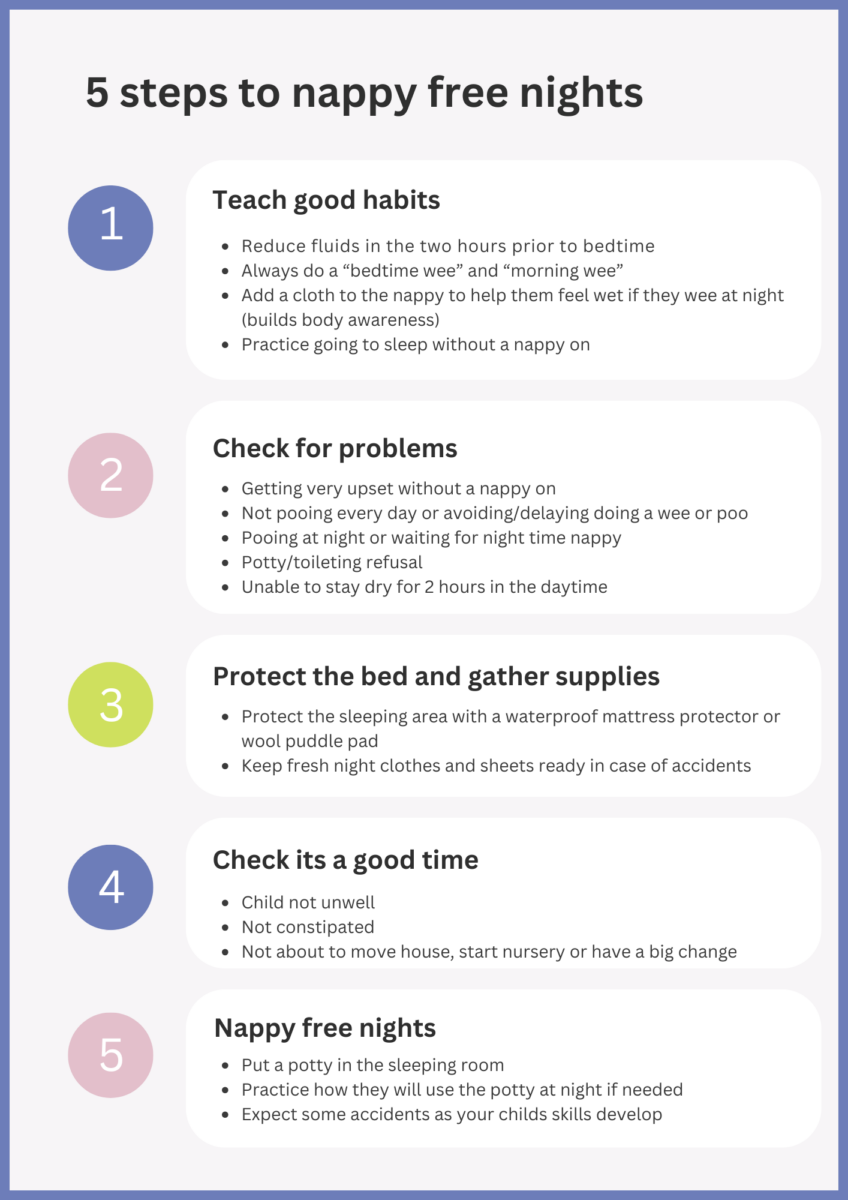
The steps start with building healthy bedtime habits and teaching independence skills before nappies are removed. Later steps focus on managing wet beds in a way that supports learning rather than stress.
When bedwetting might need extra support
Occasional accidents are completely normal while children are learning. However, there are times when it is worth seeking advice.
It is sensible to speak to a health professional if:
- a child wets every night for more than a week
- wetting happens more than once a week for more than six months
- a child regularly wets more than once a night
- a child is aged four or older and has never been dry at night
- a child was previously dry at night and begins wetting again
- there are other symptoms such as increased thirst, weight loss, fatigue, irritability or behavioural changes
- bedwetting is causing significant distress for you or the child.
Constipation is also a very common cause of bedwetting, so addressing bowel health can make a big difference.
The bottom line
Night-time potty training doesn’t need to be mysterious or left entirely to chance.
With the right habits, preparation and a calm approach, most children are perfectly capable of learning to stay dry at night. The key is to focus on building the skills that support independence rather than relying on quick fixes or waiting indefinitely.
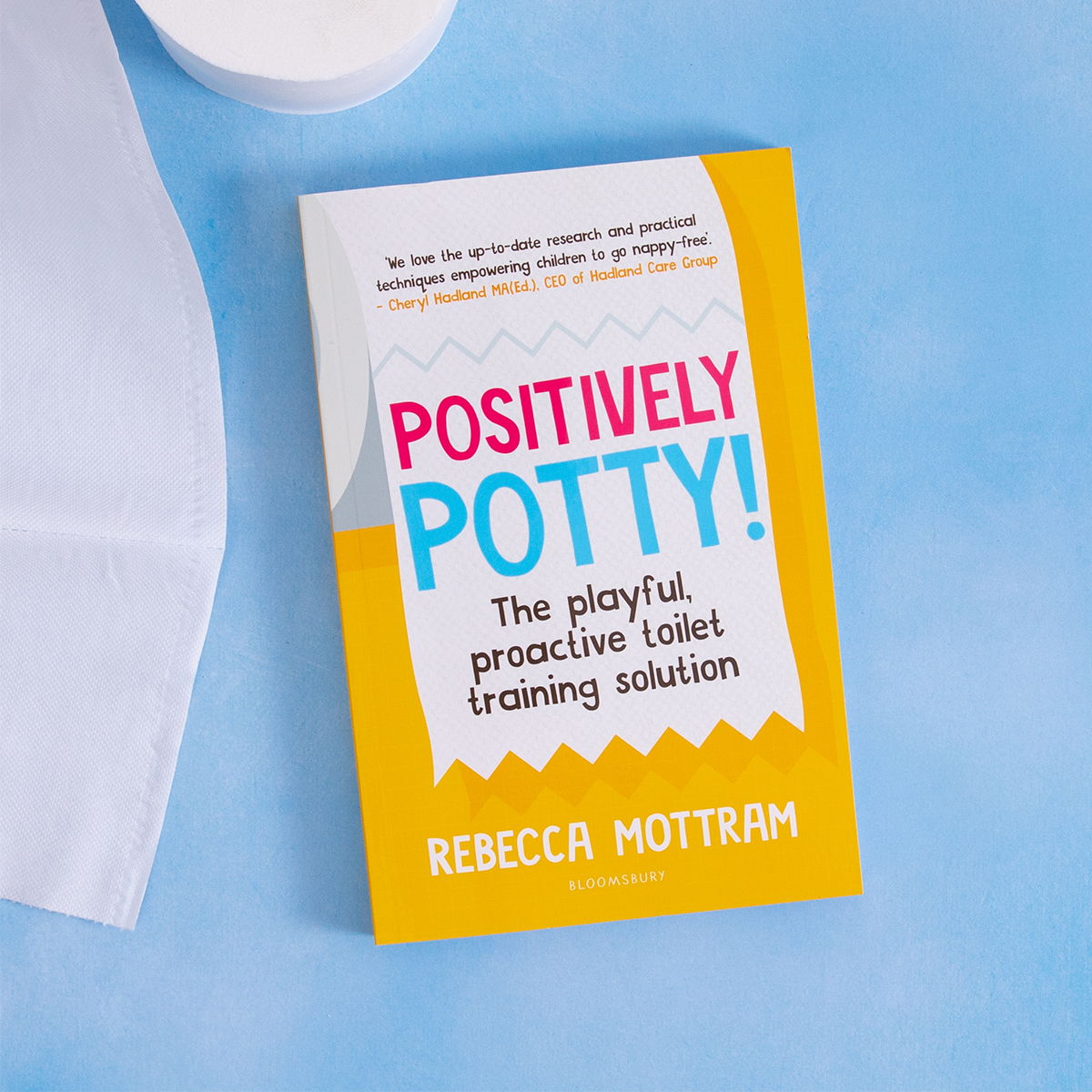
If you’d like the full step-by-step guide to supporting night dryness, you can explore the complete method and practical strategies in my book Positively Potty or via my website, where I offer plenty of free potty training resources.

About the expert
Rebecca Mottram is a children’s nurse and a leading academic authority on potty training. Her innovative methods have significantly influenced NHS guidelines, advocating for an earlier approach to potty training. Her expertise has been featured on BBC Woman’s Hour, Channel 5, BBC Radio 5 Live, and The Today Show. With more than ten years in clinical practice and countless success stories, Rebecca has transformed the way we tackle potty training. Learn more at rebeccamottram.com
Recommended reading/evidence base
Butler, R.J. and Heron, J. (2008) ‘The prevalence of infrequent bedwetting and nocturnal enuresis in childhood. A large British cohort’, Scandinavian Journal of Urology and Nephrology, 42(3), pp. 257–264.
Evans, J.H. (2001) ‘Evidence based management of nocturnal enuresis’, BMJ, 323(7322), pp. 1167–1169. DOI: 10.1136/bmj.323.7322.1167. Erratum in: BMJ 2002 Jan 12;324(7329):98.
National Institute for Health and Care Excellence (NICE) (2010) CG111: Bedwetting in children and young people: Key priorities for implementation.
Schum, T.R., Kolb, T.M., McAulitte, T.L., Simms, M.D., Underhill, R.L. and Lewis, M. (2002) ‘Sequential acquisition of toilet-training skills: A descriptive study of gender and age differences in normal children’, Pediatrics, 109(3), e48. DOI: 10.1542/peds.109.3.e48.
Sillén, U. and Hjälmås, K. (2004) ‘Bladder function in preterm and full-term infants – free voidings during four-hour voiding observation’, Scandinavian Journal of Urology and Nephrology, 215, pp. 63–68.
Sillén, U., Solsnes, E., Hellström, A., Sillen, U., Hellstrom, A.L., Hjälmas, K. and Jodal, U. (2000) ‘Voiding pattern of healthy preterm neonates’, Journal of Urology, 163(1), pp. 278–281.
Yeung, C.K., Godley, M.L., Ho, C.K., Ransley, P.G., Dutty, P.G., Chen, C.N. and Li, A.K. (1995) ‘Some new insights into bladder function in infancy’, British Journal of Urology, 76(2), pp. 235–240.
Yeung, C.K., Sreedhar, B., Sihoe, J.D., Sit, F.K. and Lau, J. (2006) ‘Differences in characteristics of nocturnal enuresis between children and adolescents: a critical appraisal from a large epidemiological study’, BJU International, 97(5), pp. 1069–1073.