By Dr Véronique Adam, Head of Acoustics, Goldmund.
A Cultural Return to Deep Listening
In an age where music is streamed, compressed and consumed on the move, listening has largely become incidental – a backdrop to daily life rather than a focused experience.Yet, alongside this convenience, a growing number of discerning listeners are rediscovering what has been lost: dimensionality, tonal richness and the emotional weight of a performance heard as it was intended. And with it, the renewed interest in dedicated listening rooms signals something deeper than a design trend. It reflects a cultural shift restoring our deepprimal connection to rhythm and pattern recognition. The renaissance of listening rooms, perpetuated through wider cultural trends such as the emergence of Tokyo’s, London’s and New York’s listening bars, create the conditions in which music can unfold with clarity and scale, revealing subtleties that remain hidden in ordinary spaces.
This resurgence represents a more mature understanding of audio. Exceptional reproduction does not come from equipment alone. It emerges from the synergy between technology and architecture, between system and space. But how do you design and perfect your environment in this move back into hi-fi enjoyment?
More Than Equipment
It is tempting to assume upgrading loudspeakers or electronics alone will transform performance. In reality, the room itself exerts a great influence on what we hear. Walls, ceiling height, materials and proportions all shape sound long before it reaches the listener’s ear.
A well-designed listening room aligns these architectural elements with the system’s capabilities. When that alignment is achieved, the result is not simply louder or clearer sound, but coherence in which imaging, timing and tonal balance feel natural and effortless.
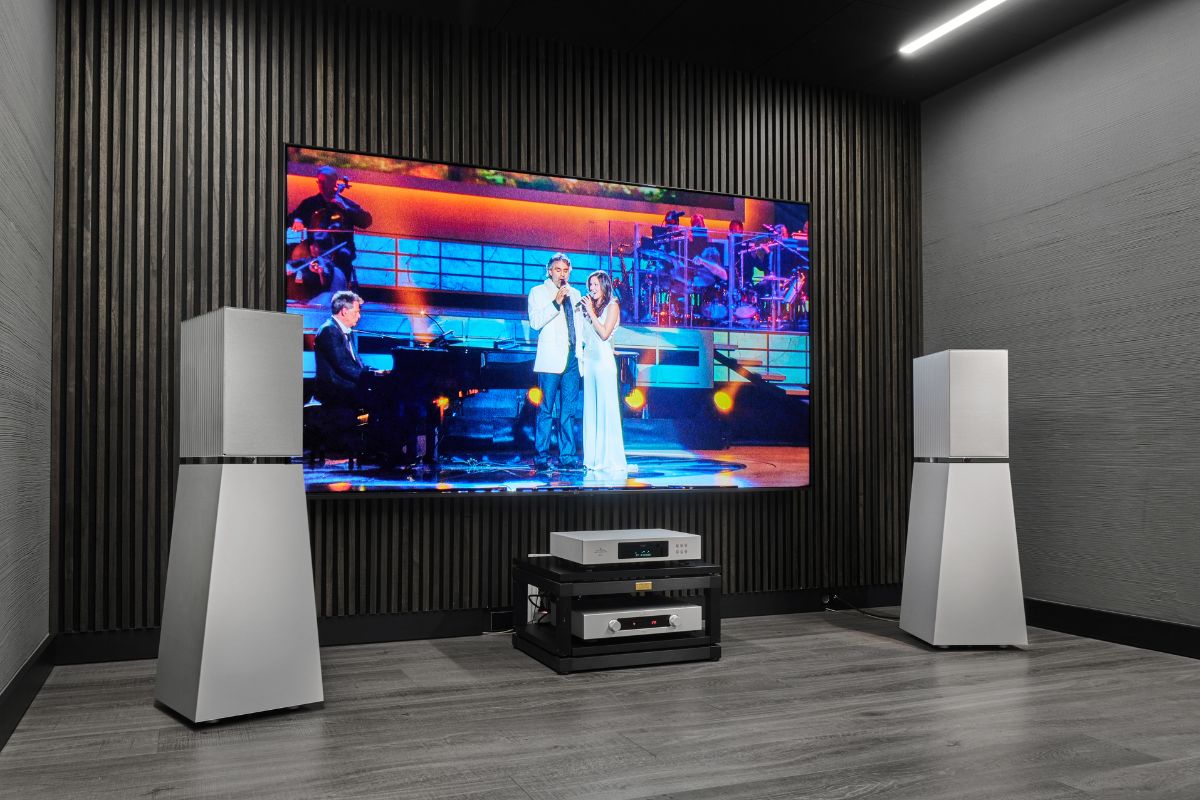
For many music lovers, this is where stereo remains the reference point. Two speakers positioned with geometric precision (typically forming an angle of around 50 degrees to the listening position) can create a remarkably immersive and stable soundstage. Instruments occupy defined positions, depth becomes perceptible and the performance takes on a tangible presence.
At the same time, the rise of sophisticated home cinema has expanded interest in multichannel environments. When carefully calculated according to a room’s dimensions and layout, immersive systems can deliver seamless movement of sound around the listener. The key word is “calculated”: the number of speakers and their placement should respond to the architecture, not follow a generic template.
Whether the room is dedicated to music, cinema or both, the guiding principle remains the same: design must serve sound fidelity, not the other way around.
Designing for Performance
Successful listening rooms begin with clarity of intention. Are you creating a home cinema, or a stereo system to bring life back to your old vinyl or your streaming music files? From that foundation, several principles consistently define exceptional results.
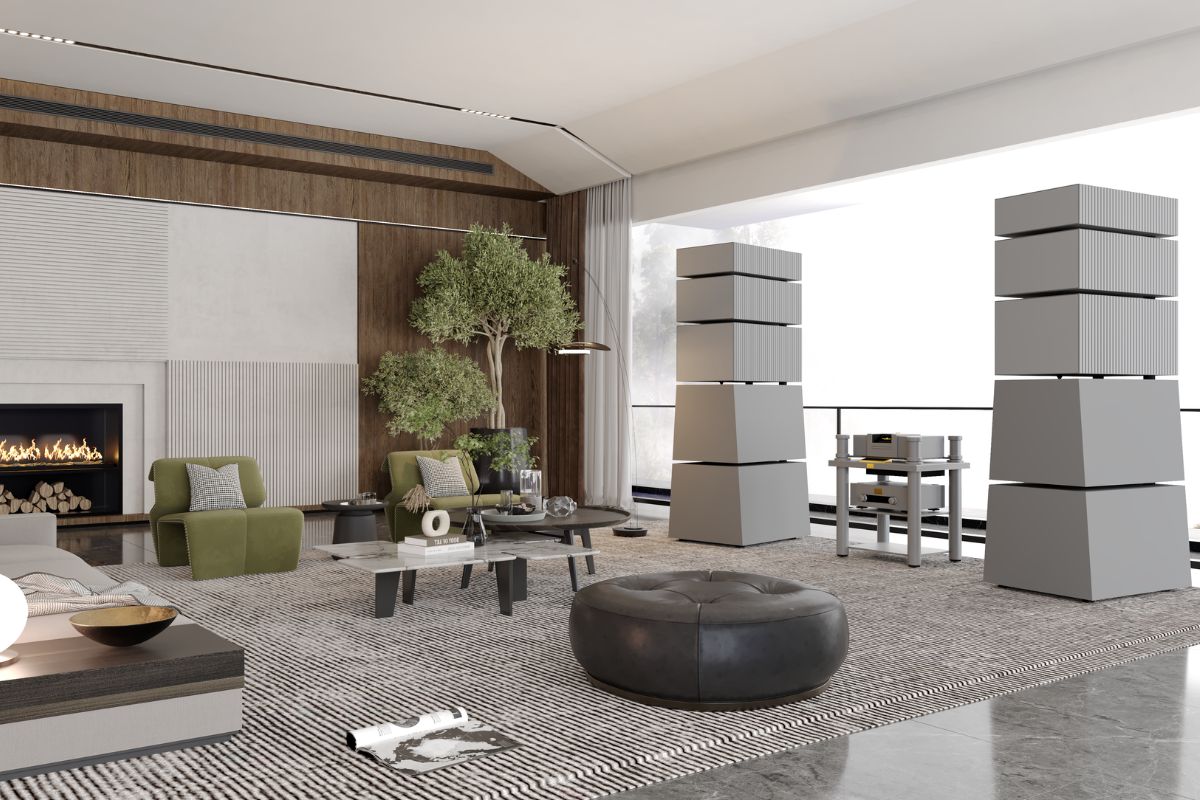
Room proportions matter profoundly. Imbalanced dimensions create standing waves and uneven bass response, while balanced ratios between length, width and height reduce these modal issues and produce smoother low-frequency behaviour. Meanwhile, surface materials must also be considered carefully. Hard, reflective finishes can introduce glare and echo; excessive absorption can rob music of vitality. The objective is equilibrium – a controlled environment that preserves energy while eliminating distortion.
Precision in positioning is equally critical. Loudspeakers should be placed with exacting attention to height, spacing and distance from boundaries. The listening seat must also be positioned so sound waves from all channels arrive cohesively. Small adjustments can dramatically affect imaging and tonal balance.
Beyond acoustics, mechanical stability plays a subtle but important role. Vibration from floors, racks or external sources, can blur transient response and spatial definition. Thoughtful isolation enhances clarity and precision.
Technology, including digital calibration tools, can refine performance further. But it works best when applied to a fundamentally sound architectural foundation. Correction should be complementary, not compensatory.
Seven Top Tips for Perfecting Your Own Listening Room
1. Decide how you’ll use the room first. Is it mainly for listening to music, watching films, or both? This will guide every other decision.
2. Choose the right room if you can. A rectangular room usually works better than a square one. Very small rooms can make bass sound boomy.
3. Optimize your room acoustics. Your listening space is as important as your equipment. Proper acoustic treatment allows your system to perform at its full potential.
4. Place your speakers carefully. Keep them at ear height when you’re seated, and avoid pushing them right up against the walls.
5. Sit in the right spot. Try not to sit too close to the back wall. Moving your chair even slightly can improve the sound.
6. Soften the room naturally. Rugs, curtains, sofas and bookshelves all help reduce echo and improve sound without making the room look technical.
7. Keep the room quiet and stable. Reduce background noise from air conditioning or traffic if possible, and make sure speakers and equipment sit on solid, steady surfaces.
Fidelity Without Compromise
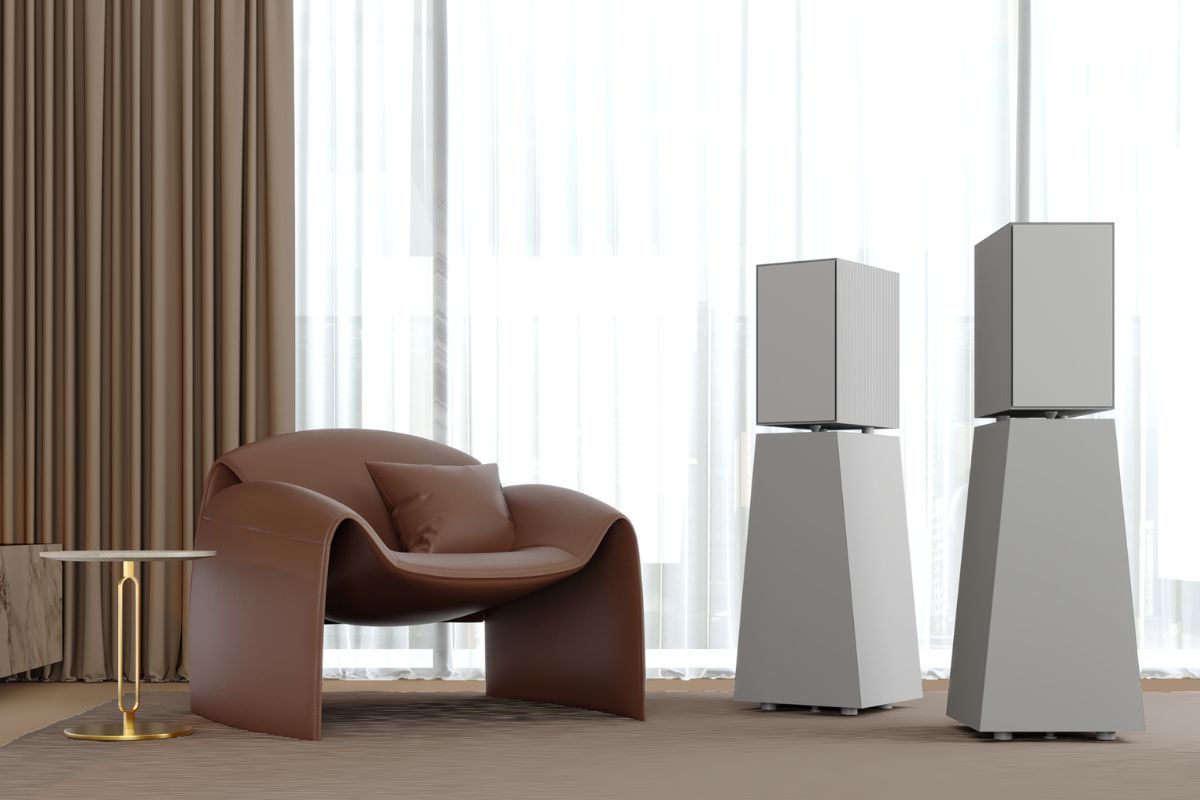
At its highest level, a listening room is not about showcasing equipment. It is about transparency. When design, engineering and architecture converge successfully, the system disappears. What remains is the music, dimensionally, dynamically and emotionally complete. In a world driven by convenience and compression, choosing to create such a space is a deliberate act. It is a commitment to experiencing artistry in its fullest form.
That is the essence of fidelity without compromise: not excess, but precision; not volume, but truth.
About the expert
 Dr Véronique Adam works in the field of high-performance audio engineering as Head of Acoustics at Goldmund. She is a distinguished expert in electro-acoustics and digital filtering, playing a pivotal role in Goldmund’s continuous innovation and technological advancements. Dr. Adam develops groundbreaking projects and technologies such as Proteus HT modelling for Goldmund’s home theater solutions, Proteus LS for loudspeaker system design, and the renowned Leonardo Time Distortion Correction.
With over 25 years of expertise in electro-acoustics, Dr. Adam began her career at the Laboratory of Electromagnetics and Acoustics (LEMA) at the Swiss Federal Institute of Technology (EPFL). During her seven-year tenure at EPFL, she contributed to a wide range of industrial and international research projects, including studies on aircraft noise reduction and active noise control. Her work extended to areas such as infrasonic acoustic filter design, electrodynamic loudspeaker analysis and synthesis, and the interaction between sound sources and loudspeaker arrays.
A recognised authority in her field, Dr. Adam has shared her expertise on numerous global panels and authored over 10 internationally published papers on the science of sound. Her extensive knowledge continues to propel Goldmund to the forefront of the international audio electronics market, ensuring the brand remains synonymous with cutting-edge innovation.
Dr. Adam holds a Ph.D. in Technical Sciences from EPFL, where her thesis, “Loudspeaker Behaviour under Incident Sound Fields,” set a benchmark in the study of acoustics. She also earned a Master’s degree in Micro-Technical Engineering from the same prestigious institution.
Beyond her professional achievements, Dr. Adam is a member of the Swiss Audio Engineering Society (AES) Committee and an avid enthusiast of piano, opera, and the history of 19th-century music. She also enjoys reading, adding depth and diversity to her interests.