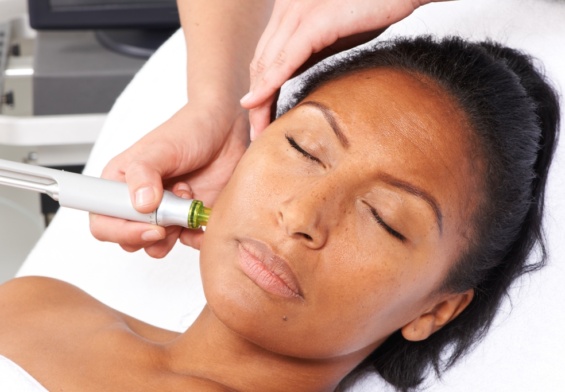
By Marie-Royce Book, trichologist and eyebrow specialist at the Wimpole Clinic.
Hair loss is one of the most common concerns I see in clinic, and also one of the most misunderstood. People often arrive already convinced they know the cause: “it’s just genetic” or “it’s just stress.” Sometimes they’re right. More often, the real picture is a little more layered than that, and getting the cause right is the difference between a treatment plan that works and months of guessing.
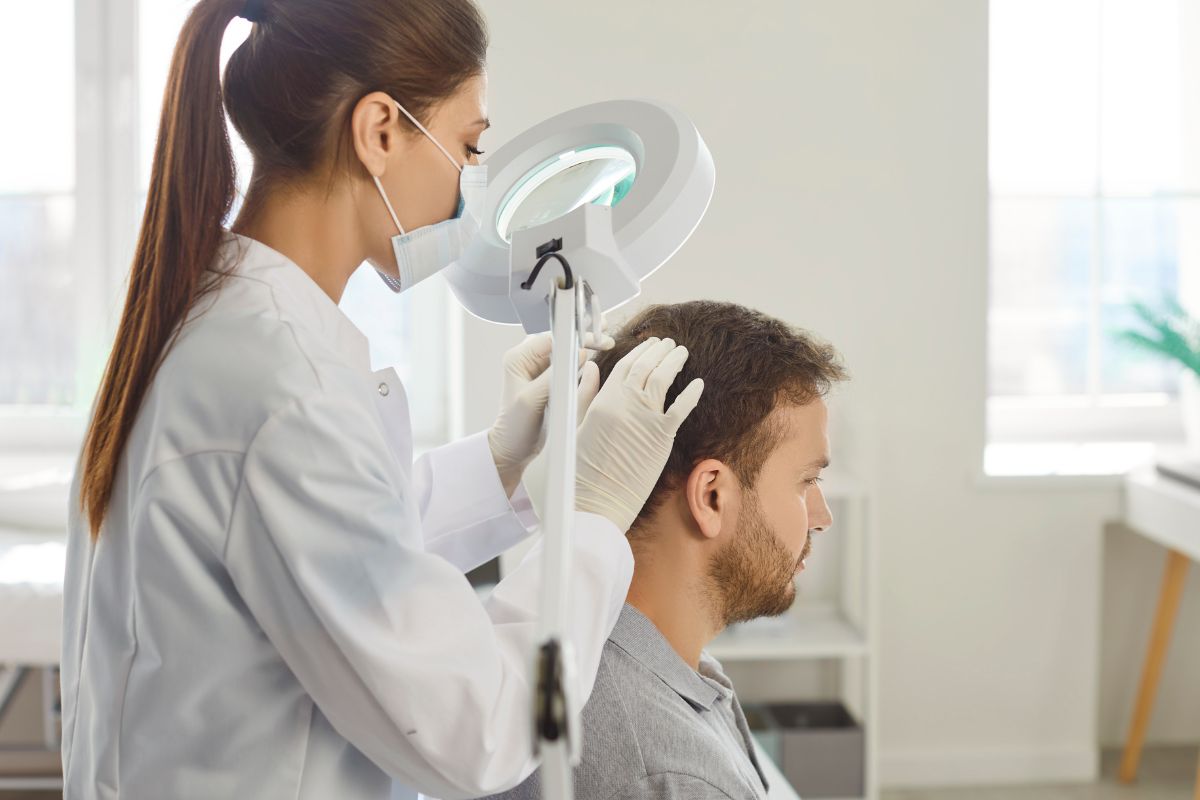
The Many Causes of Hair Loss
Genetic hair loss, known clinically as androgenetic alopecia, is the most common cause I see, and it affects both men and women, though it tends to present differently in each. It’s gradual and follows a recognisable pattern rather than appearing overnight.
Hormonal changes are another major factor, particularly postpartum, during perimenopause and menopause, and with thyroid imbalances.
Then there’s telogen effluvium, a stress or shock-related shedding that tends to follow a trigger, such as illness, a major life event or crash dieting, by around two to three months, and which is usually temporary.
Traction alopecia comes from consistently tight hairstyles, extensions or ponytails pulling on the follicle over time. Nutritional deficiencies, particularly low iron, vitamin D or protein, can also drive thinning, as can autoimmune conditions like alopecia areata, which causes patchy loss.
It’s also worth separating hair loss, which happens at the follicle, from hair breakage, which is damage to the hair shaft itself, often from heat styling or chemicals. The two look similar but need completely different approaches, and I see this confusion in clinic constantly.
Myths I Hear All the Time
Wearing hats does not cause baldness; there’s no evidence for it.
Shaving your head does not make hair grow back thicker; that’s an optical illusion caused by blunt regrowth rather than a change in the hair itself.
“If it’s genetic, nothing can be done” is also false; there are legitimate ways to manage and slow genetic hair loss, and the earlier it’s addressed, the more options are available.
And hair loss is very much not just a male problem; a significant proportion of the patients I see are women.

When to See a Trichologist or GP
Sudden or patchy hair loss warrants a GP visit first, to rule out underlying medical causes.
Diffuse thinning that feels rapid or unusual is worth seeing a trichologist for pattern assessment, alongside a GP referral for bloods covering ferritin, thyroid function and vitamin D.
If hair loss comes with scalp symptoms like itching, redness or soreness, don’t wait it out; see a professional promptly.
My Top Tips If You’re Worried About Hair Loss
- Don’t panic about normal shedding; losing as much as 50 to 100 hairs a day is entirely normal.
- Track any changes with photos over a few months, since patterns are much easier to spot than memory alone.
- If thinning appears alongside tight hairstyles or extensions, ease off before it becomes permanent.
- Ask your GP for a blood test covering ferritin, thyroid function and vitamin D if thinning is diffuse.
- Be wary of “miracle” over-the-counter products promising results with no clinical evidence to back them up.
- Address the underlying cause rather than just the symptom; a shampoo alone rarely fixes hormonal or nutritional hair loss.
- Act sooner rather than later, since most causes respond far better to early intervention.
- Manage stress where you realistically can; telogen effluvium usually resolves naturally once the trigger passes.
As a trichologist at the Wimpole Clinic, I see this whole range of causes every day, and if there’s one thing I’d want anyone worried about their hair to take away, it’s that an accurate diagnosis matters more than any single product on the shelf.
About the expert
Marie-Royce Book is a trichologist and eyebrow specialist at the Wimpole Clinic, Harley Street’s award-winning hair restoration clinic. She specialises in hair loss, hair transplantation and more niche areas of restoration including eyebrow and intimate hair transplants, and is a regular expert voice in the media on modern hair restoration.